Ending Violence Against Women and Girls


Introduction
Violence against women and girls is a systemic and deep-rooted problem in our society. It is a problem that is hidden in plain sight, and every day, we see how it affects the lives of women and girls, wherever they learn, live, and work.
The Ending Violence Against Women and Girls (EVAWG) Strategic Framework will address the whole range of gender-based violence, abuse and harm which is disproportionately experienced by women and girls, and which is rooted in gender inequality.
Read the EVAWG Strategic Framework (PDF, 1 MB) (opens new window)
Let's work together to create a changed society where women and girls are free from all forms of gender-based violence, abuse, and harm, including the attitudes, systems, and structural inequalities that cause them.
For more information, please explore the information and resources below.
Drama production: "Girls Like That" | Friday 27 November, 6:30pm - 8pm | Queen's Hall, Newtownards
"Girls Like That" is an urgent and explosive play that explores the pressures on young people today in the wake of advancing technology. When a naked photograph of Scarlett goes viral, she becomes the centre of attention for all the wrong reasons. But while rumours run wild and everyone forms an opinion, Scarlett just stays silent.

Following the performance, there will be a Q&A session with a panel including PSNI, Women's Aid, and YMCA. Funded by Ards and North Down from the Executive Office Ending Violence Against Women and Girls Strategy.
TW: this play deals with themes of consent, leaked nude photographs, and misogyny. Suitable for those ages 14 +.
Booking link - https://www.eventbrite.com/e/girls-like-that-pla| y-tickets-1999081537693
Police Service of Northern Ireland: Power to Change Campaign

Young men urged to challenge online misogyny as Power to Change enters second phase.
Online words have offline consequences.
Young men and boys across Northern Ireland are being encouraged to question and challenge misogyny online as the Police Service of Northern Ireland, Department of Justice and The Executive Office launch the second phase of the Power to Change campaign.
Phase Two turns its attention to the online world and the everyday digital behaviours that can allow misogyny to become normalised.
Social media, gaming platforms, group chats, comment sections and online communities are an everyday part of young people's lives. While these spaces can provide connection, friendship and creativity, they can also amplify harmful attitudes towards women and girls and in some cases escalate to criminal behaviour.
From 1st April 2025 to the 31st March 2026, there were 1,971 reports of online stalking and harassment (12% increase from the previous year), 591 reports of online blackmail (11% increase) and 110 reports of the sharing of indecent images or 'revenge porn' (21% increase).
The campaign asks young men to consider: What type of man do you want to be?
Rather than focusing solely on criminal behaviour, Power to Change examines the attitudes, words, jokes, images and online behaviours which can create environments where abuse is accepted and can ultimately escalate.
The message is simple: violence, abuse, intimidation and harassment does not always begin that way. Harmful attitudes can begin much earlier—and everyone has the power to challenge them.
Phase Two will encourage men and boys to become active allies: questioning what they see online, challenging their friends when something crosses the line, supporting people who are targeted and refusing to amplify harmful content.
Six new campaign films will bring those issues to life through recognisable situations across online and everyday life. The films are designed to encourage conversation and reflection rather than simply tell young men what they should think or do. The PSNI describes them as everyday moments occurring across group chats, gaming platforms, comment sections and social feeds.
Chief Constable Jon Boutcher said:
"Power to Change has always been about prevention. Policing has an obvious role when behaviour becomes criminal, but as a society we also need to ask what happens before we reach that point.
"Words matter. Jokes matter. What we like, share and allow to go unchallenged online matters.
"This campaign isn't about blaming young men. It's about recognising the positive influence men and boys can have on each other.
"You don't need a confrontation or a big speech to make a difference. Sometimes it's questioning a comment, refusing to share something, checking in with someone who is being targeted or having a quiet word with a mate.
"Those small moments can set a different standard. We all have the Power to Change."
First Minister Michelle O'Neill said:
"Power to Change is about challenging the attitudes and behaviours that can lead to violence against women and girls while empowering everyone to play their part in creating a safer society.
"This next phase brings that message into the online spaces where young people spend so much of their time. It encourages men and boys to think about what they see, say and share online, challenge misogyny whenever they encounter it and be positive allies to women and girls.
"Online words can have real-life consequences, and behind every comment, message or post is a real person. By challenging harmful attitudes, calling out misogyny and choosing respect, we can all use our power to drive lasting change and help make women and girls safer."
Deputy First Minister Emma Little-Pengelly said:
"The Power to Change campaign is an important part of our work to prevent violence against women and girls and the focus on the online world for Phase 2 of the campaign is vital.
"We all know that what happens online does not stay online. Ideas influence attitudes, attitudes influence behaviour, and behaviour affects real lives which is why I would encourage everyone to engage with the campaign's message and use it as an opportunity to start conversations about respect, healthy relationships and the role we can all play in creating positive change.
"Whether it's challenging a harmful comment, refusing to share harmful content, or supporting someone who has been targeted, small actions make a real difference and I have no doubt this campaign will make an impact."
Justice Minister Naomi Long said:
"Social media offers incredible opportunities to learn, connect, and share ideas. However, it can also be a place where harmful attitudes and behaviours spread quickly. Online misogyny, discrimination, hatred, or prejudice directed towards women and girls, can normalise disrespect, fuel harassment, and create environments where abuse is tolerated. I therefore warmly welcome phase two of the Power to Change campaign and its focus on challenging inappropriate online content and behaviours".
A refreshed Power to Change website will support the second phase, providing practical, youth-focused information and resources.
New content will help users understand and challenge the 'manosphere' and harmful gender narratives, explore positive ideas of masculinity through 'Man to Man' conversations, and understand how online sexual content can influence attitudes towards relationships, consent and women and girls.
It will also provide information on how to navigate new age technology like AI and warn of consuming harmful content like extreme pornography.
The campaign encourages people not simply to consume online content passively, but to question it, think before sharing it and recognise the influence their own actions can have.
Online words and actions have offline consequences. 19 year old Jodie Morrow was studying in Belfast in March 2020 when she matched with 25 year old Ezra Garfield, who at the time was known as Riagain Grainger, on a popular dating app.
They went on a couple of dates, until Ezra revealed to Jodie that he was in fact on bail for a previous case which he was also subsequently sentenced for. Jodie then immediately cut contact. That is when the harassment began. Jodie was bombarded with missed calls, messages and even had disturbing images sent to her by 'friends' of Garfield's, however he alone was behind it all. Ezra then lied to the police, telling them he was still in an active relationship with Jodie and making false counter allegations.
In February he was jailed for 19 months with a further 19 on supervised license for stalking involving serious harm and distress.
Since then Jodie has worked with the Police Service of Northern Ireland to strengthen their training and understanding of online and harassment cases and is speaking at the launch today as an advocate of the Power to Change campaign.
She says:
"Ultimately, my case began with a man unable to take rejection. His entitlement and sense of ownership over me, despite being in the early days of getting to know each other, laid the groundwork for four months of harassment.
"There is no simple solution to tackle violence, abuse, intimidation and harassment of women and girls, but hopefully this campaign will continue to challenge attitudes and move the needle towards a safer society for all of us."
Find out more through the Power to Change website: https://powertochange.info/
Ending Violence Against Women and Girls: Change Fund Grant Programme | Currently closed
The Change Fund will help to mobilise grassroots action, support innovative delivery, and maximise the impact of community-led initiatives that contribute to the prevention outcomes of the EVAWG Strategic Framework.
These are:
Outcome 1: Changed attitudes, behaviours, and culture - Everyone in society understands what violence against women and girls is, including its root causes, and plays an active role in preventing it.
Outcome 2: Healthy, respectful relationships - Everyone in society is equipped and empowered to enjoy healthy, respectful relationships.
Outcome 3: Women and girls are safe and feel safe everywhere - Organisations and institutions across government and society embed the prevention of violence against women and girls in all that they do, so that women and girls are safe and feel safe everywhere.
The Change Fund will open for applications on Thursday 19 February 2026 and applications will close Friday 20 March 2026.
Tier 1: grants between £1,000 and £5,000
Tier 2: grants between £5,001 and £15,000
Tier 3: grants between £15,001 and up to £25,000
For any further enquiries please contact EVAWG@ardsandnorthdown.gov.uk
Find out more about our partner organisations
- Kilcooley Women's Centre Kilcooley Women's Centre | Bangor | Social Enterprise
- Nexus Home - Nexus NI
- Onus Domestic violence and abuse training | ONUS Training
- White Ribbon End male violence against women
- Women's Aid North Down & Ards Women's Aid Homepage
- YMCA Lisburn - ymca Ireland
Domestic and Sexual Abuse Community Toolkit - Ards and North Down
This Toolkit has been produced as a community resource to address Domestic and Sexual Abuse within our society.
The toolkit aims to provide a comprehensive, practical and accessible resource that helps community focused individuals and organisations to recognise the signs of domestic and sexual abuse, respond appropriately and refer individuals to the necessary support and services.
Read it here: Domestic and Sexual Abuse Community Toolkit- Ards and Down (PDF, 2 MB) (opens new window)
Female Genital Mutilation Resources
Female Genital Mutilation (FGM) is the act of removing all or part of the external female genitalia for non-medical reasons (WHO, 2016). FGM is also referred to as female genital cutting or female circumcision. There are no health benefits to the cutting or removal of female genitalia and it is recognised internationally as a human rights violation (Forward, 2016). The World Health Organisation (WHO) estimates that approximately 140 million women and girls globally have experienced it.
Please see resource documents below:
FGM Pathway and Risk Assessment (PDF, 843 KB) (opens new window)
FGM Scoping Study NI (PDF, 7 MB) (opens new window)
Multi-Agency Practice Guidelines on Female Genital Mutilation (PDF, 350 KB) (opens new window)
Honour-based Abuse in the Courts: Shaping Strategy for Key Issues (PDF, 2 MB) (opens new window)
Public Consultations Sessions and Online Survey | Closing 30 October 2026
Ards and North Down Borough Council requires a new local, evidence led strategy to be developed for 2027-2031. This will be aligned to The Ending Violence Against Women and Girls (EVAWG) Strategy launched by the Executive Office in 2024.
An online consultation is currently available: Ending Violence Against Women and Girls Strategy and Action Plan Survey
The survey is live until 30 October 2026
A number of public consultation sessions, in-person and online, will take place:
Tuesday 6th October 2026
- Kilcooley Women's Centre, 1 Kilcooley Square, Bangor BT19 1SH | 1pm - 3pm
- Online via MS Teams | 6pm - 8pm
Wednesday 7th October 2026
- Portavogie Community Centre, 54 New Harbour Road, Portavogie, BT22 | 1pm - 3pm
- Manor Court Community Centre, 4LT, 69 Mill St, Newtownards BT23 4LW | 6pm - 8pm
Wednesday 14th October 2026
- Online via MS Teams | 10am - 12pm
To register your attendance, please email: evawg@ardsandnorthdown.gov.uk
Ending Violence Against Women and Girls (EVAWG) Showcase Event | Thursday, 19 February 2026
On Thursday 19 February, Council hosted a 'Project Showcase Event', bringing all the projects together to share the fantastic work they have been doing. It was a day full of great discussion, idea sharing, networking, and lots of emerging opportunities for collaboration.
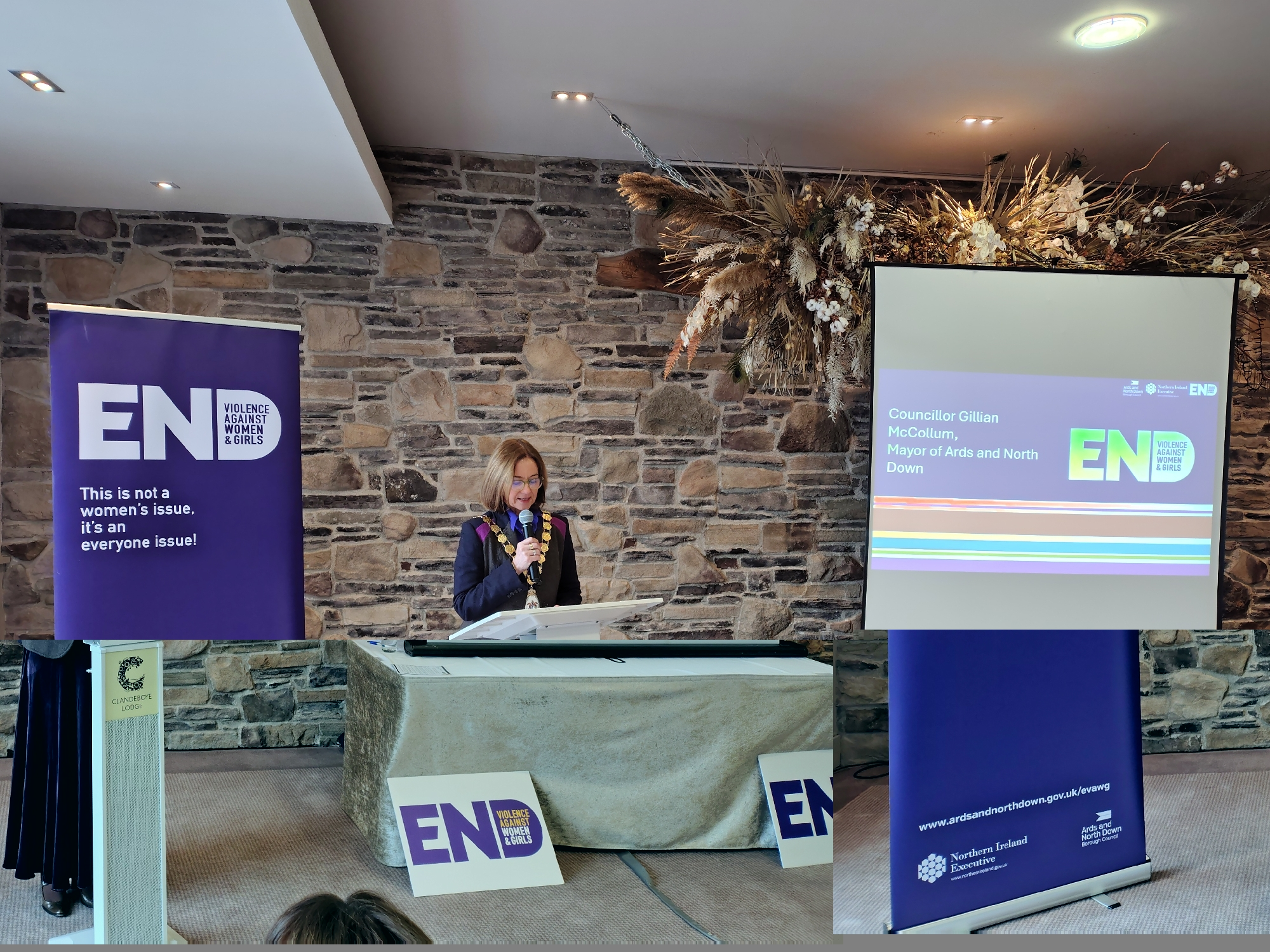
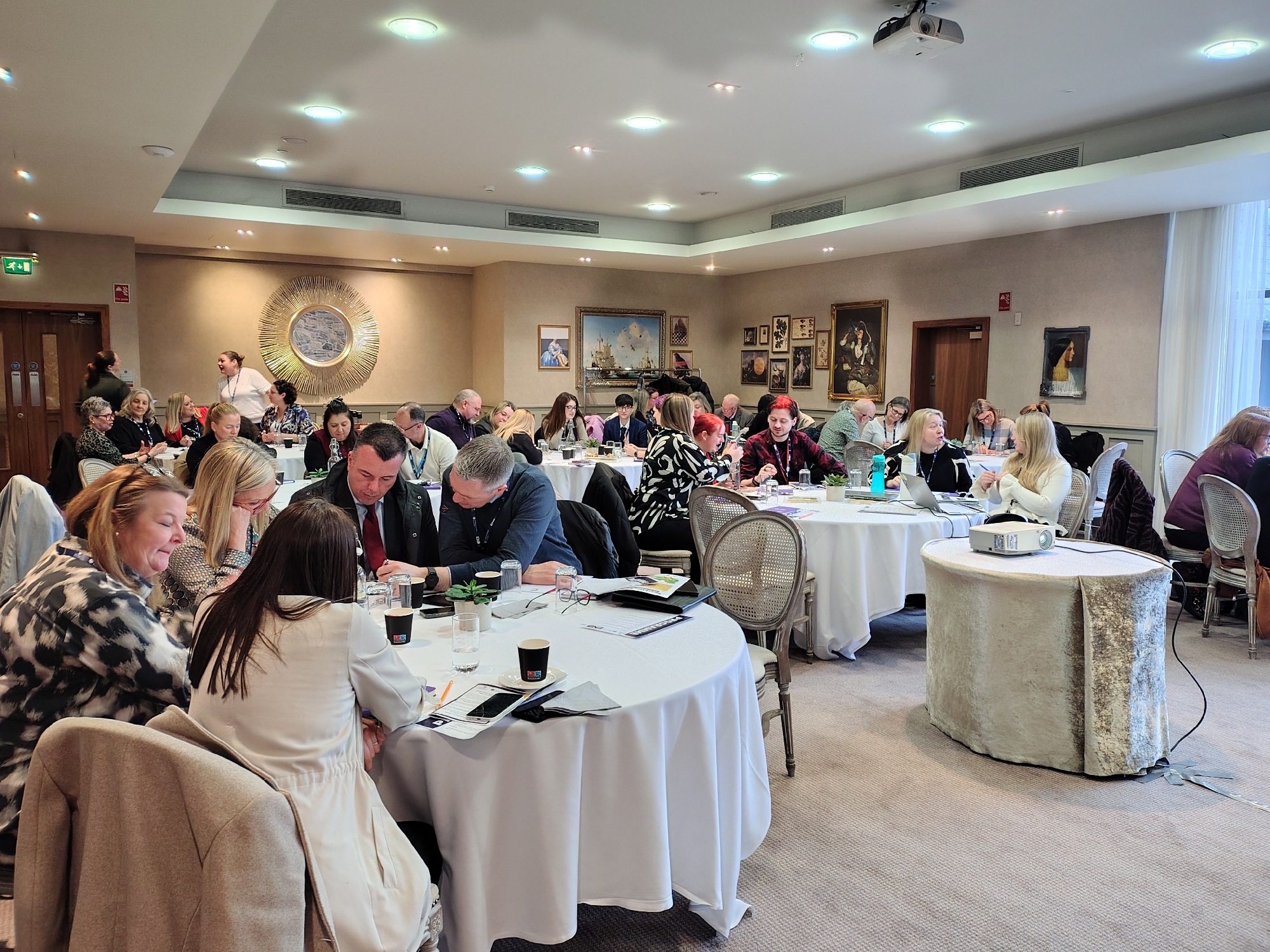
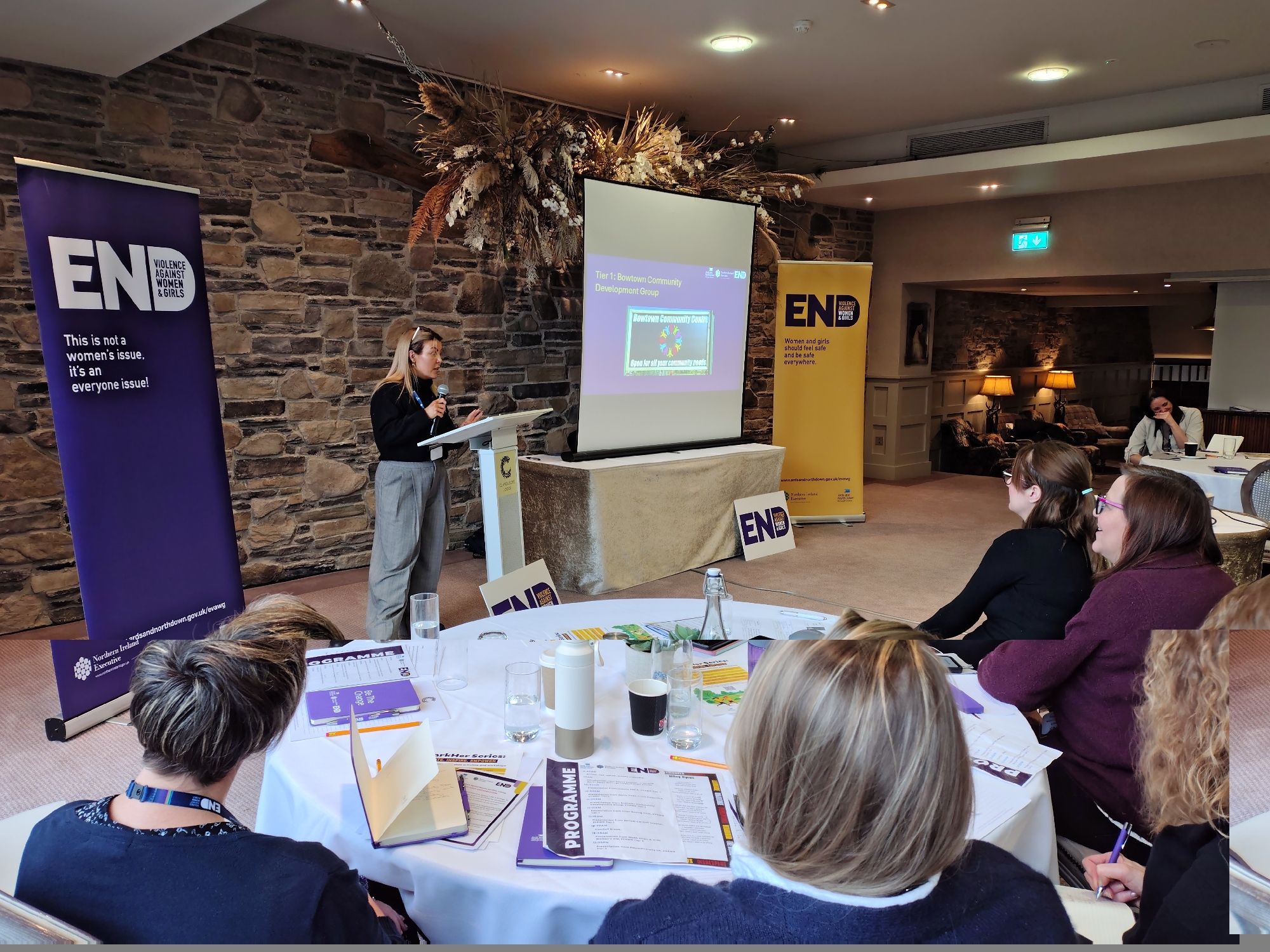
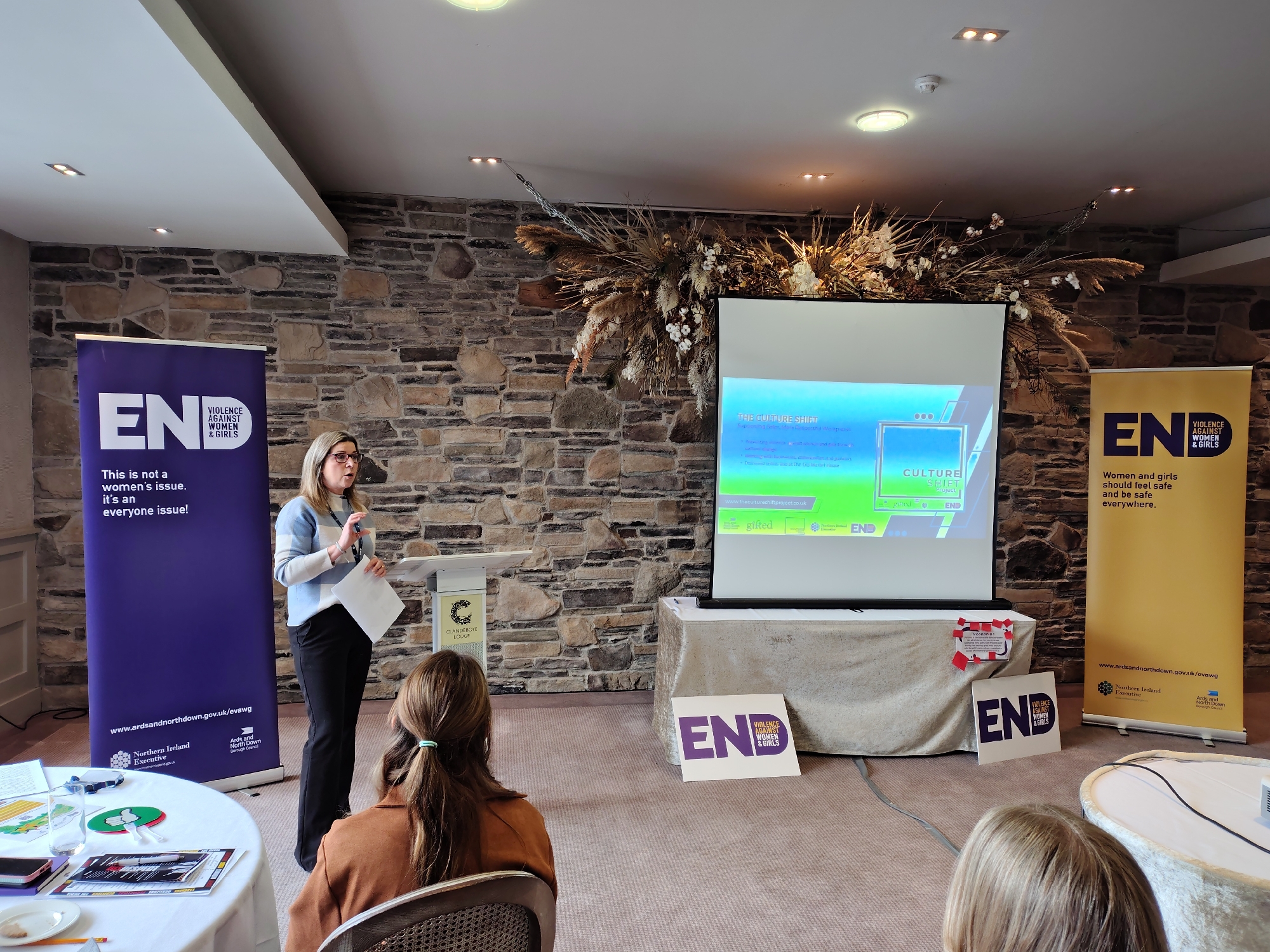
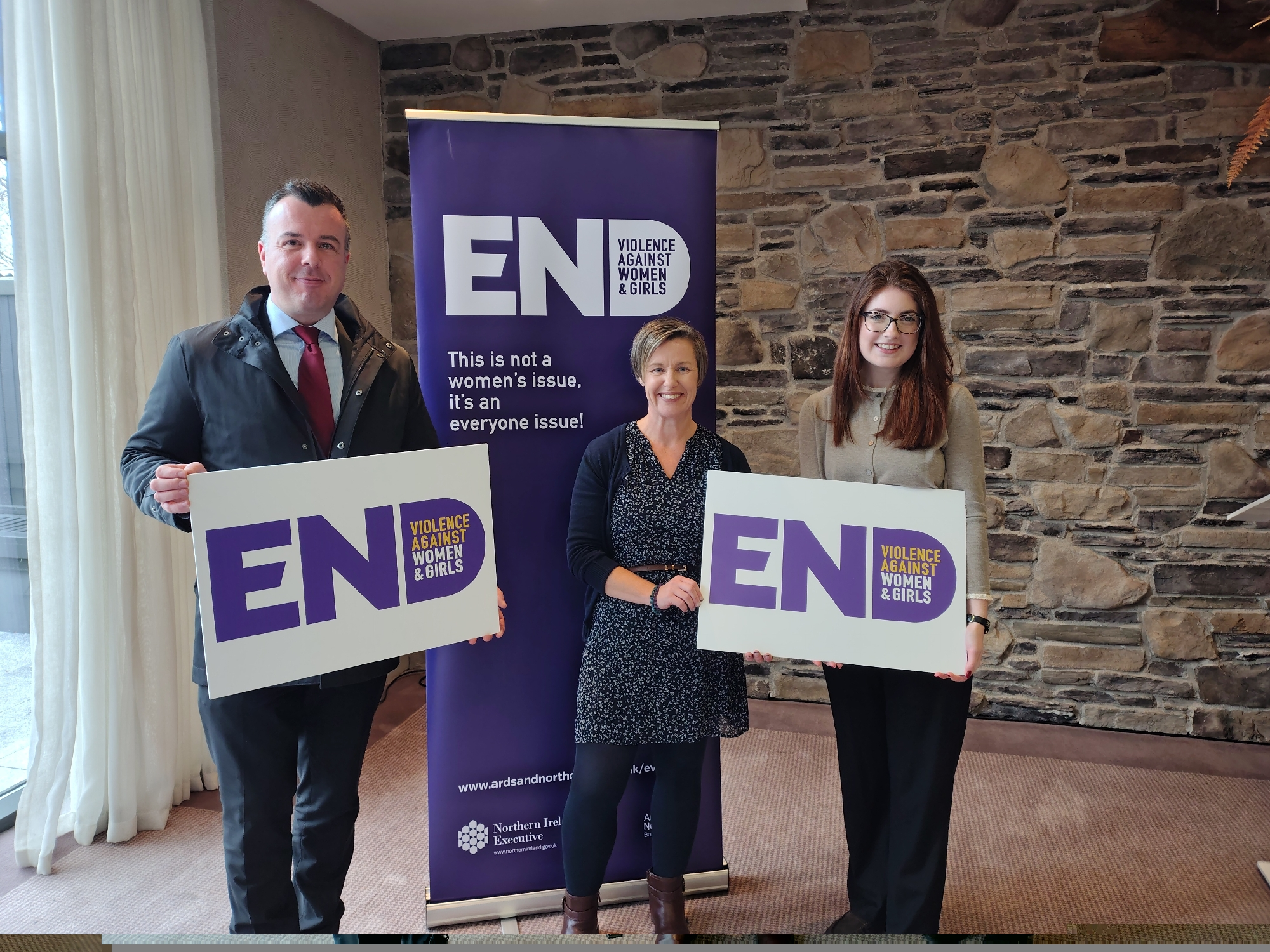
Image gallery carousel
EVAWG Showcase and Change Fund launch Feb 2026
EVAWG Showcase and Change Fund launch Feb 2026 (6)


As part of the event, Mayor of Ards and North Down, Cllr Gillian McCollum officially launched The Change Fund 2026/27.
For any further enquires please contact EVAWG@ardsandnorthdown.gov.uk


